Tracking How Instant Entry Features Affect Format Preferences in Mobile Hold'em Environments
Written by Devon Hartmann · Nov 6, 2026
Tracking How Instant Entry Features Affect Format Preferences in Mobile Hold'em Environments
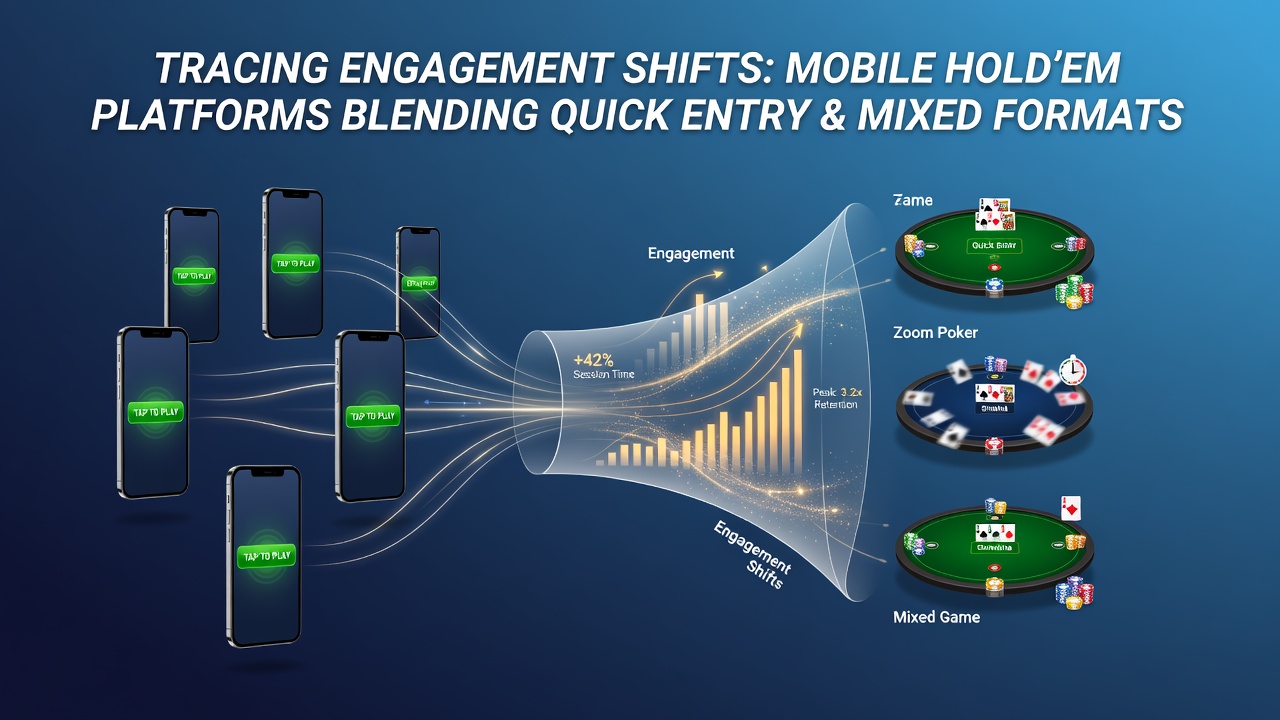
Platform operators have introduced rapid onboarding tools that let users move directly into cash tables or scheduled events without extended setup steps, and researchers tracking these systems note measurable changes in how participants allocate their time between different game structures. Data from industry monitoring services shows increased session starts in the first quarter of each year when these tools roll out across multiple operators, with patterns emerging around simultaneous availability of ring games and multi-table tournaments on the same app.
Platform Design Elements Driving Initial Access
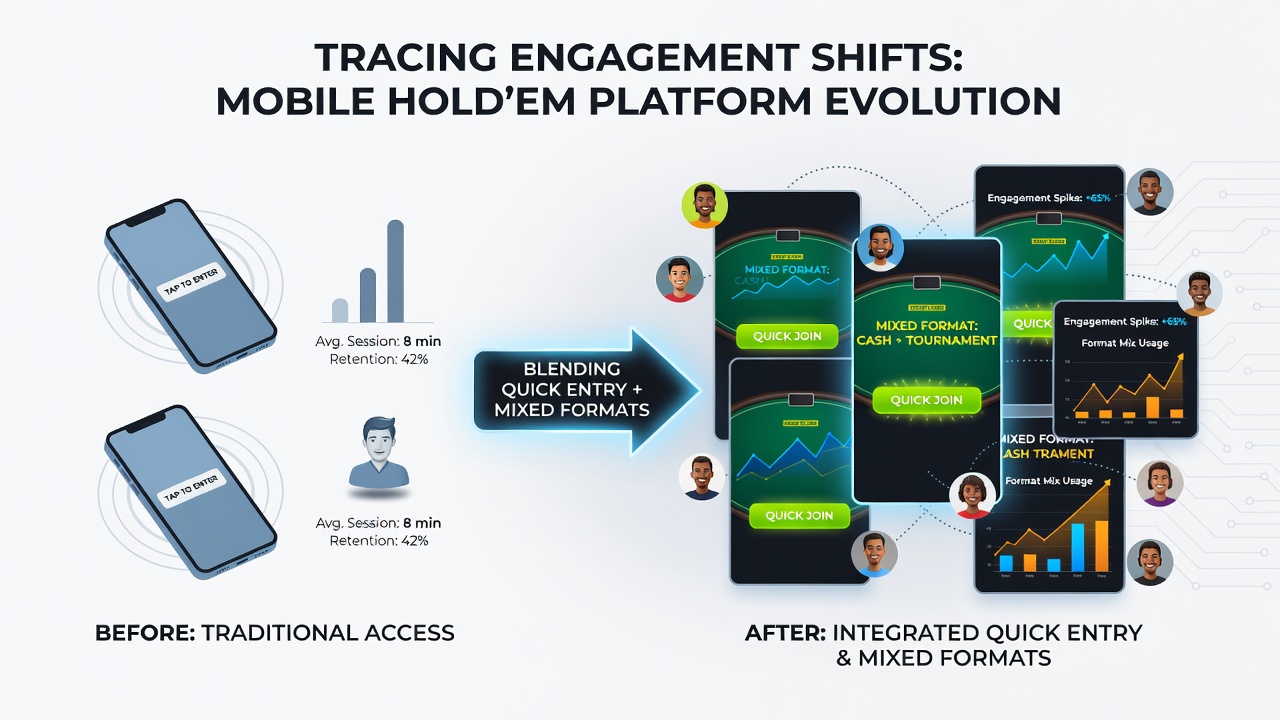
Developers integrate one-tap deposit flows and pre-loaded stake options that connect straight to both real-time dealer cash sessions and fixed-schedule competition ladders, while mobile interfaces display available formats side by side. Observers from market analysis firms report that users who begin in one format often complete a switch within the same login period when the alternative appears in a prominent menu position. Figures from device usage studies indicate average time from app launch to first hand has decreased as these blended displays become standard, particularly on tablets and larger phones where split-screen views remain feasible.
Recorded Patterns in Format Transitions
Analytics collected across several European and North American operators reveal that players who enter via instant cash table prompts later register for tournaments at rates higher than those who start through event-only paths. A report issued by the Canadian Gaming Association in late 2025 documented a 12 percent rise in cross-format activity during periods when quick-entry buttons remained visible throughout a session. Meanwhile, data compiled by the University of Nevada Reno gaming research group points to similar relocation trends in markets where operators added live-dealer hybrids alongside standard mobile tables, with movement peaks occurring mid-week rather than on weekends.
Those monitoring engagement note that shorter cash game bursts frequently precede longer tournament commitments when entry friction stays low, and session logs show participants returning to cash tables after early tournament exits more readily than in previous platform versions. Australian market data released through the Interactive Games and Wagering Association further supports these observations, highlighting consistent daily format changes among users who keep multiple game types open in the background.
Regional Variations in User Movement
European operators operating under Malta Gaming Authority oversight recorded elevated afternoon switches from cash to tournament formats in November 2026, coinciding with the addition of mobile-specific qualifiers tied to larger live events. In contrast, platforms serving the Asia-Pacific region showed stronger evening transitions in the opposite direction, with users exiting tournaments to join cash tables that remained available around the clock. Research summaries from the Asia Pacific Association of Gaming Regulators indicate these directional differences align with local time-zone activity peaks rather than any single platform feature.
Industry reports also reference cases where operators adjusted menu prominence for specific formats and then measured resulting traffic redistribution within 48 hours. One documented instance involved a mid-sized operator that moved tournament listings above cash options on the home screen, after which initial entries into events rose while cash table occupancy adjusted downward before stabilizing over the following week.
Measurement Approaches Used by Analysts
Tracking services employ session-level logging that timestamps entry points and subsequent format changes without requiring player identifiers, allowing aggregated views of movement sequences. Academic papers from gaming studies departments emphasize the value of comparing cohorts who encounter quick-entry prompts against control groups using traditional registration sequences. Results consistently show higher total hands played per active day when multiple formats load simultaneously, though total session duration varies by region and device type.
Additional metrics include the frequency of mid-session format changes and the proportion of users who maintain activity across both cash and tournament offerings within a single 24-hour window. These indicators help operators identify whether blended access correlates with sustained participation across the full range of available structures.
Conclusion
Available datasets from regulatory bodies and academic centers demonstrate that quick-entry tools paired with mixed-format displays produce measurable relocation between cash tables and tournament formats on mobile Hold'em platforms. Continued collection of session data across regions will clarify how these design choices influence long-term participation distributions as operators refine their interfaces through 2027 and beyond.